
Secure Boot is one of those Windows features that sounds technical and intimidating, but for most home users it works quietly in the background without any action needed. You may see it mentioned in system requirements, security guides, or BIOS menus and wonder whether it’s something you should be changing. Windows 11 Secure Boot is designed to protect your PC during the earliest stage of startup, before the operating system even loads.
This article explains what Secure Boot actually does in Windows 11, when it matters for home users, and when it’s best left alone.
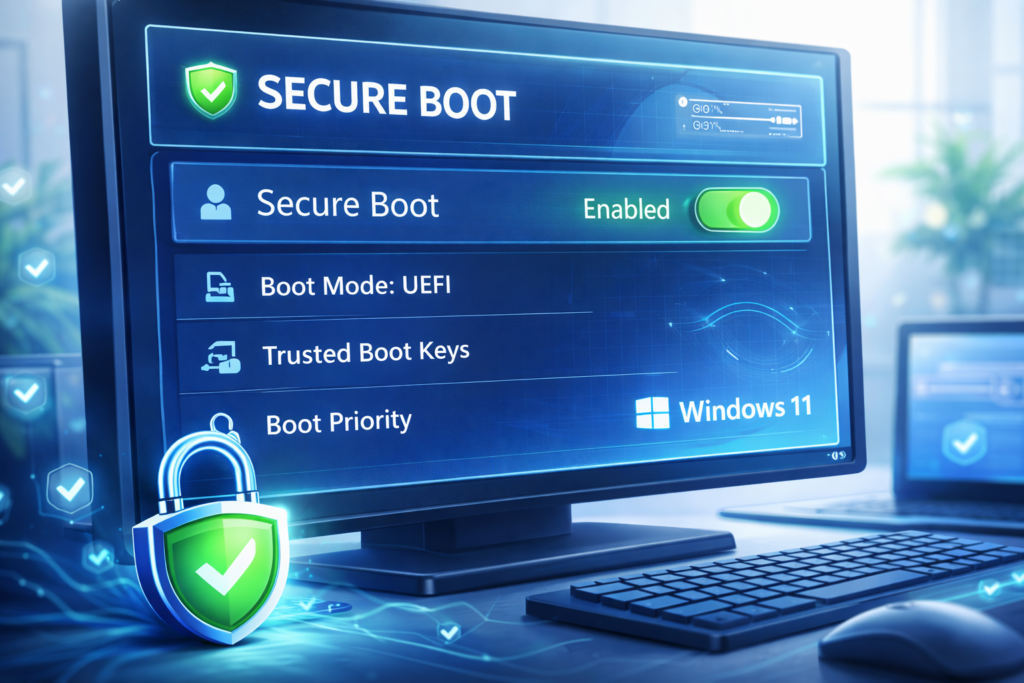
What Secure Boot Is in Windows 11
Secure Boot is a security feature built into modern PCs at the firmware level (often referred to as UEFI). Unlike antivirus software, which runs inside Windows, Secure Boot works before Windows even starts.
Its job is simple:
- It ensures your PC only boots using trusted, digitally signed software
- It blocks unauthorised bootloaders or tampered startup files
- It helps prevent certain types of malware from loading before Windows
Because Secure Boot runs so early in the startup process, it protects parts of the system that normal security tools can’t see.
Is Secure Boot Enabled by Default on Windows 11?
In most cases, yes.
Windows 11 requires Secure Boot support as part of its system requirements. That means:
- Most PCs that shipped with Windows 11 already have Secure Boot enabled
- Many Windows 10 systems that upgraded to Windows 11 also have it turned on automatically
You usually don’t need to enable it manually unless:
- Windows was installed on older hardware
- Firmware settings were changed at some point
If you’re curious, you can check Secure Boot status in Windows without entering the BIOS:
- Open System Information
- Look for Secure Boot State
If it says On, everything is working as intended.
When Secure Boot Really Matters for Home Users
For most people, Secure Boot is a set-and-forget feature, but it does provide real benefits in certain situations.
Secure Boot helps protect against:
- Malware that tries to load before Windows
- Rootkits that hide from traditional antivirus tools
- Tampering with startup files on shared or second-hand PCs
If you:
- Use your PC for online banking
- Share it with other users
- Bought it pre-owned or refurbished
…then Secure Boot adds a useful extra layer of protection without affecting normal use.
When Secure Boot Can Cause Confusion
Secure Boot can become confusing when users enter firmware settings or try advanced setups.
Common scenarios include:
- Installing another operating system alongside Windows
- Using older hardware or unsigned drivers
- Changing BIOS or UEFI settings without knowing what they do
In these cases, Secure Boot may prevent certain software from loading. This doesn’t mean Secure Boot is broken — it’s doing exactly what it’s designed to do.
If you’ve never intentionally changed firmware settings, you generally don’t need to worry about this.
Should You Change Secure Boot Settings?
For most home users, the answer is no.
If:
- Windows 11 is running normally
- You’re not installing another operating system
- You’re not troubleshooting a specific boot issue
Then Secure Boot should be left enabled.
Disabling it without a clear reason doesn’t improve performance and can reduce protection during the earliest stage of startup.
Secure Boot and Windows Security
Secure Boot is just one part of Windows 11’s overall security approach. It works alongside features like built-in antivirus protection, firmware protections, and operating system safeguards to reduce risk before Windows fully loads.
If you’re interested in how these protections work together, it’s worth reviewing the broader Windows 11 security and privacy settings that protect your system during normal use.
Final Thoughts
Secure Boot isn’t something most home users need to manage actively. On modern Windows 11 systems, it’s usually enabled by default and does its job quietly in the background.
As long as your system is running normally, the safest approach is to leave Secure Boot alone and let it provide protection during startup without getting in the way.
For most people, that’s exactly how it should work.
Windows 11 Security & Privacy Explained for Home Users
To read more about secure boot from official Microsoft resources, please click here